

Global Broker Regulation Inquiry App
About WikiFX


ChatGPT Trading Boom Exposes Forex Investors to New Risks

WikiFX
|


Abstract:A trader can describe a strategy in ordinary language, ask ChatGPT to translate the idea into code and potentially turn that output into the foundation of an automated trading system. That accessibility is powerful, but it also creates a dangerous misconception: generating a trading strategy is not the same as proving that the strategy works.
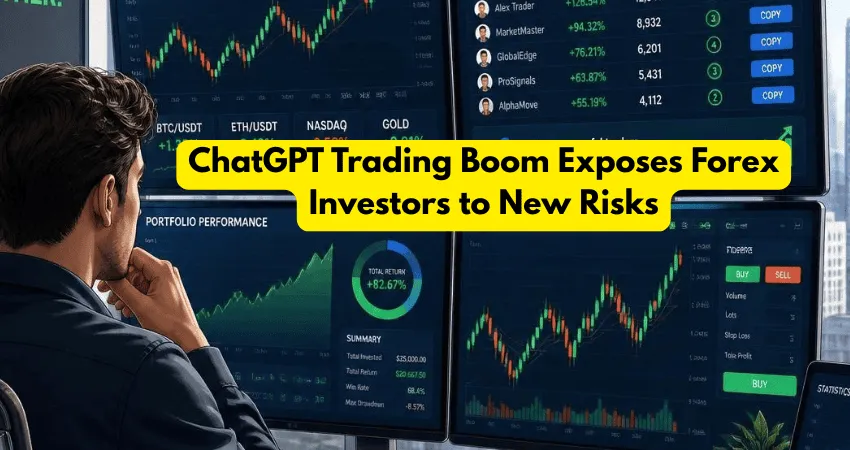
The arrival of generative artificial intelligence has given retail forex traders access to capabilities that once appeared reserved for programmers and quantitative trading desks. A trader can describe a strategy in ordinary language, ask ChatGPT to translate the idea into code and potentially turn that output into the foundation of an automated trading system.
That accessibility is powerful, but it also creates a dangerous misconception: generating a trading strategy is not the same as proving that the strategy works.
Traders with limited programming knowledge can suddenly experiment with automation without building every component from scratch. Yet the distance between an impressive piece of generated code and a profitable live trading system remains enormous.
A strategy still needs to be tested against historical market data, examined under different market conditions and checked for programming errors before real capital is exposed.
Artificial intelligence also does not eliminate the fundamental risks of foreign exchange trading. The United States Commodity Futures Trading Commission warns that roughly two out of three retail foreign exchange traders lose money during a typical quarter. It has also cautioned consumers about automated programs and artificial intelligence enabled bots marketed as tools capable of generating trading signals or executing positions. Technology may impose discipline or automate instructions, but it cannot consistently predict what markets will do next. That limitation becomes particularly important when leverage enters the equation.
Foreign exchange traders often control positions considerably larger than their initial deposits. This can magnify profits, but it can also transform relatively small currency movements into severe losses. Investor.gov warns that leveraged forex positions can wipe out an investor's entire initial investment and, depending on the arrangement, potentially expose the trader to additional losses.
The danger therefore lies not in using artificial intelligence itself, but in assigning it authority it has not earned.
A chatbot can help explain indicators, organise trading rules, generate sample code and assist with research. None of those functions proves that the resulting strategy has a durable statistical advantage. Errors in assumptions, data or code can be amplified when an automated system begins placing trades at machine speed.
For Malaysian traders, this issue has direct relevance as online forex communities, signal groups and automated trading products continue to reach consumers through social media and messaging applications. Before money is transferred, traders should independently establish who operates the platform, whether the entity has the necessary regulatory standing and whether claims about artificial intelligence can actually be verified. Artificial intelligence may lower the technical barrier to building a trading strategy, but it does not lower market risk. For Malaysian investors tempted by the idea of an algorithm that can effortlessly outsmart global currency markets, the crucial question is no longer whether AI can produce a trade.
It is whether the trader understands what happens when that trade is wrong.
Disclaimer:
The views in this article only represent the author's personal views, and do not constitute investment advice on this platform. This platform does not guarantee the accuracy, completeness and timeliness of the information in the article, and will not be liable for any loss caused by the use of or reliance on the information in the article.
WikiFX Broker
Latest News
Alpari Broker Exposed: What Are Other Traders Saying About This Broker?
WikiFXGold Forecast: the USD Index Soars to New 2026 Highs
WikiFXChatGPT Trading Boom Exposes Forex Investors to New Risks
WikiFXUS Dollar Price Forecast: Dollar Holds Firm as Fed Bets Ease, EUR/USD and GBP/USD Struggle
WikiFXWebull Uses Ai To Prepare Trades, Users Can Review & Approve Them Manually
WikiFXGRAND MARKETS Review 2026: Traders Report Fast Trade Execution & Low Spreads. Should You Invest?
WikiFXSTARTRADER Raises Client Fund Insurance to US$30Million
WikiFXUS Bonds Eye Softer Inflation After Core PCE Undershoots Forecasts
WikiFXTNG eWallet Opens Global Stock Trading to 8.5 Million Users
WikiFXTiger and Chris Podcast – U.S. 10-Year Treasury Yield Retreats After Reaching 5.34%, Highest Since 2002
WikiFX